
- From
- India
- Hospital for treatment
- Xinhua Hospital, Shanghai Jiao Tong University School of Medicine
- Disease
- Severe spinal deformity associated with stiff-person syndrome
- Treatment/medical stage
- Preoperative traction, nutritional support and spinal orthopedic surgery
Rare disease superimposes severe spinal deformity
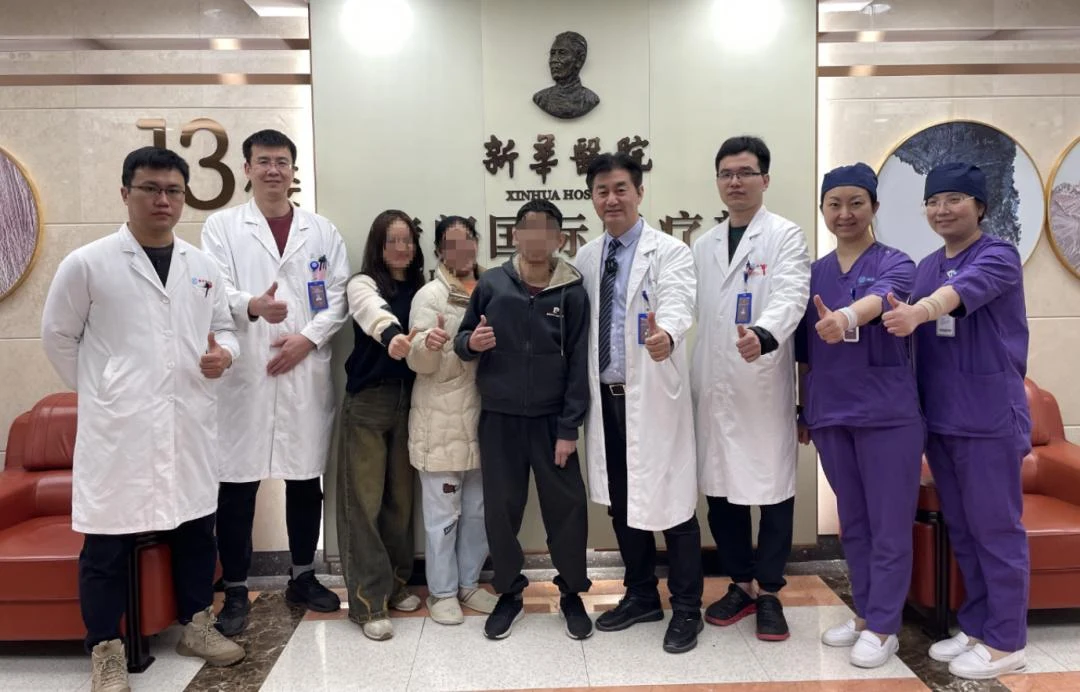
"Xiaobao", a fourteen-year-old boy from India, suffers from a disease related to stiff-person syndrome, which is accompanied by extremely severe scoliosis and kyphosis, which affects breathing, standing and daily activities. In May 2023, he came to Shanghai Xinhua Hospital, hoping to improve the functional impairment caused by the deformity.
Improve physical condition first
The team did not arrange surgery directly, but conducted traction and nutritional support for about five months to create conditions for high-risk orthopedics. Spine surgery collaborates with neurology, anesthesia, nutrition and other specialties, while taking into account the rare disease itself and perioperative risks.
Complete complex spinal correction
On January 9, 2024, Yang Junlin’s team performed the posterior orthopedic surgery for about seven hours. Postoperative multidisciplinary support for recovery continues. Reports have documented improvements in patients' standing, walking, and sitting postures; height changes were due to correction of spinal deformities rather than short-term growth.
Improve function and continue to manage primary disease
At the time of reporting, the patient was able to stand and walk without relying on a walker. This result reflects the staged functional improvement brought about by spinal correction and does not mean that stiff-person syndrome has been cured. Management of the underlying disease and subsequent rehabilitation still need to be ongoing.
Report source
Shanghai Xinhua Hospital/The Paper · 2024-02-23 · View the original report ↗
- 来自
- 印度
- 就诊医院
- 上海交通大学医学院附属新华医院
- 疾病
- 僵人综合征相关严重脊柱畸形
- 治疗/就医阶段
- 术前牵引、营养支持与脊柱矫形手术
罕见病叠加严重脊柱畸形
来自印度的十四岁少年“小宝”患有僵人综合征相关疾病,伴随极严重的脊柱侧弯和后凸,影响呼吸、站立与日常活动。2023 年 5 月,他来到上海新华医院,希望改善畸形带来的功能障碍。
先改善身体条件
团队并未直接安排手术,而是进行约五个月的牵引与营养支持,为高风险矫形创造条件。脊柱外科与神经、麻醉、营养等专业协作,同时考虑罕见病本身及围手术期风险。
完成复杂脊柱矫形
2024 年 1 月 9 日,杨军林团队实施约七小时的后路矫形手术。术后由多学科继续支持恢复。报道记录,患者的站立、步行和坐姿得到改善;身高变化来自脊柱畸形矫正,而不是短期生长。
改善功能,继续管理原发疾病
报道时,患者已能够不依靠助行器站立和行走。这一结果反映脊柱矫形带来的阶段性功能改善,不代表僵人综合征已被治愈。原发疾病管理与后续康复仍需持续进行。