
Zoying Health Content Team | Sources checked October 26, 2026
Shanghai is not the only place to explore orthopedic care in China. For patients seeking further assessment of a spine condition, joint surgery or a difficult problem after a fracture, Xi’an Honghui Hospital is a northwestern Chinese resource Zoying believes deserves attention.
Our interest is its substantial orthopedic infrastructure and its separate clinical pathways for spine, joints and trauma. Those distinctions help turn a broad inquiry about “orthopedic surgery in China” into a request for the relevant team.
A back problem may involve a disc, degeneration, deformity or previous surgery. Knee pain may raise questions about joint preservation, replacement or sports injury. A useful cross-border inquiry begins by distinguishing these needs.
What is Honghui’s place in Chinese orthopedics?
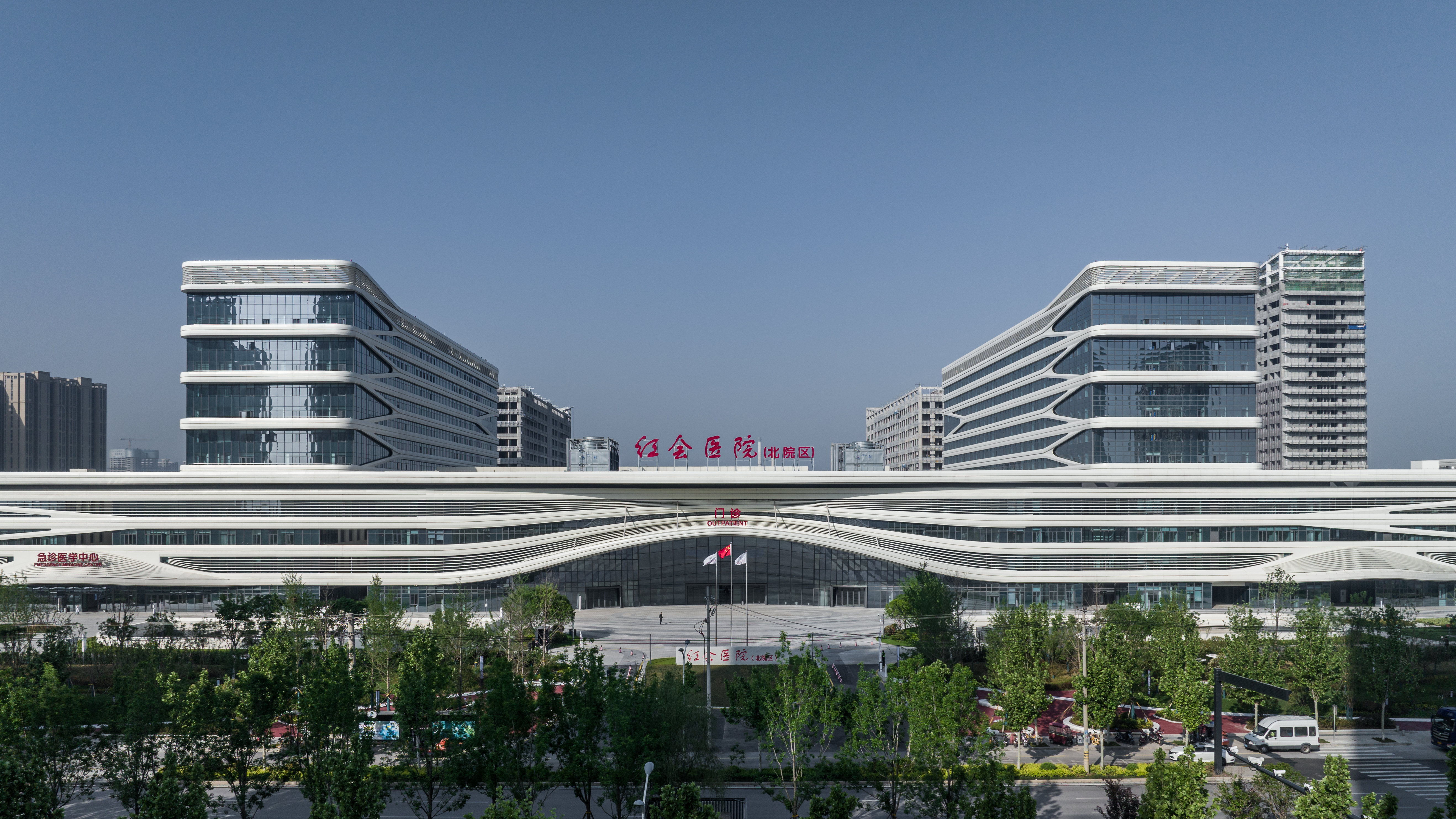
Honghui is a Grade III Class A general hospital with a strong orthopedic focus. Its official profile identifies orthopedics as a national key clinical specialty and also describes the institution as Shaanxi Provincial Orthopedic Hospital and an affiliated hospital of Xi’an Jiaotong University. Official hospital profile.
The hospital also uses the description “one of the three major orthopedic centers” in its public material. We treat this as its historical institutional positioning, not as an independently verified current ranking of third in China. For today’s patient, matching the actual condition to a team is more useful.
Surgical activity: separate hospital totals from historical department figures
| Scope | Official disclosure | How to interpret it |
|---|---|---|
| Whole hospital | At the end of 2025: 3,000 operating beds, including 2,000 orthopedic beds; more than 116,000 operations annually | The hospital profile’s figure covers the whole institution, not orthopedics alone or an individual surgeon. |
| Joint disease service | More than 5,000 operations annually | Department description published March 25, 2019; a historical activity reference. |
| Orthopedic trauma service | More than 8,000 operations annually | Also from a profile published March 25, 2019; not a 2025 figure. |
| Sports medicine center | Nearly 4,000 operations annually | Profile published March 25, 2019; not a measure of current team capacity. |
Sources: hospital, joints, trauma, sports medicine. We retain the publication dates rather than relabeling older departmental figures as current statistics.
The scale makes Honghui worth investigating. Choosing care still requires answers about the relevant team, similar cases, current availability and follow-up arrangements.
A first priority: identify the right spine pathway
The hospital’s directory separates spine services into areas including degeneration and tumors, discs and deformity, minimally invasive care, lumbar and cervical conditions, trauma and older patients, and scoliosis and pain. Official department directory.
For an overseas patient, this is an opportunity to ask a more precise question. If fusion has been proposed, ask what structural problem and treatment objective it addresses. If you have had surgery, explain the procedure and when symptoms changed. If you are interested in a minimally invasive approach, ask whether it is applicable to your findings.
The degeneration-and-tumor unit describes work involving disc herniation, spinal stenosis, spondylolisthesis and spinal tumors, including endoscopic and minimally invasive fusion techniques. Official unit profile.
Prepare more than a screenshot of a diagnosis: a symptom timeline, available imaging and reports, previous operation notes, current medicines and functional difficulties. The receiving team confirms whether remote input is available and what further assessment is needed.
A second priority: joint preservation, replacement and revision
The joint service’s official description covers hip and knee disorders, replacement, revision and joint-preserving approaches. Official joint service profile.
These represent different treatment objectives, not a list from which patients should choose the newest technique. Someone hoping to retain their own joint needs an explanation of suitability. Someone considering replacement needs to discuss expected function, implants and rehabilitation. A problem after a previous replacement requires the original procedure and implant information as part of the assessment.
Zoying can help organize the discussion around what most affects daily life, what the local team has already proposed and which question needs another explanation. You do not need to select an operation before contacting us.
A third priority: complex trauma and reconstruction after fracture
The trauma service’s public description includes pelvic and acetabular fractures, nonunion, bone loss, bone infection and post-traumatic problems. Official trauma service profile.
A complete history is especially valuable here. Imaging from the original injury, procedure details, subsequent reviews and present symptoms may all contribute. If several operations have been performed, organize them by date rather than sending only the most recent admission record.
Ask what the assessment will focus on, which tests might be required, whether care could be staged and which steps would be undertaken in China. An acute serious injury needs prompt local treatment rather than waiting for an international arrangement.
Sports medicine and foot-and-ankle services offer further routes
Honghui has sports medicine pathways for knee-and-ankle and shoulder-and-elbow problems. Its foot-and-ankle center describes deformity, degeneration, trauma and sports-injury work. Sports medicine, foot and ankle.
If the main difficulty is instability during activity, shoulder movement, recurrent ankle injury or a foot deformity, explain that limitation and your goals at the outset. This supports more useful matching than directing every inquiry to general orthopedics, and keeps rehabilitation and functional management in the discussion.
How should you choose between Xi’an and Shanghai?
Zoying does not compare Honghui’s 116,000-plus hospital-wide operations directly with Shanghai Sixth’s 71,880 orthopedic operations. They describe different scopes and cannot determine which institution is better for you.
Compare teams for the same clinical problem, their proposed approach, available assessment and scheduling, a complete budget, language arrangements and rehabilitation. The city is one consideration, not a substitute for a team-specific evaluation.
Bring the advice you already have to the conversation: is the Chinese team proposing something meaningfully different? What practical value could that difference offer? What travel, cost and continuing-care requirements would it involve?
What should a foreign patient establish before visiting Honghui?
Honghui publishes a foreign-patient guidance page, but the English material is dated 2019. It provides a historical service reference, not confirmation of today’s arrangements. Official international patient guidance.
Before departure, confirm the department, campus, registration and payment requirements, language support and caregiver arrangements. The hospital has north and south campuses: use the confirmed appointment location rather than an old page or the first map result.
For budgeting, separate assessment, tests, surgery, anesthesia, implants, admission and rehabilitation. Clarify outpatient follow-up, accommodation, transport and interpretation too. Discharge does not automatically mean readiness for a long flight; discuss return travel with the medical team.
What can Zoying provide?
We can organize your diagnosis, treatment timeline, access to original imaging and questions. Within the agreed scope, we communicate with relevant institutions and follow up on record requirements, acceptance feedback and available cost information, distinguishing confirmed details from outstanding replies.
For patients proceeding to Xi’an, we can coordinate agreed visit, language and practical travel support. The intended benefit is greater clarity about the team, the questions and the next step before deciding to travel.
This is a public-information resource guide, not confirmation that a specific doctor has accepted your case or a claim of exclusive cooperation. Medical decisions are made by the hospital and clinicians.
Tell Zoying about your orthopedic inquiry · Pre-travel coordination
This guide combines the updated hospital profile with dated historical departmental descriptions. The source-check date is not the statistical year for every figure. It does not replace individual medical assessment.