
When reporters visited the Second Affiliated Hospital of Zhejiang University School of Medicine in September 2026, a young patient from Russia was practising walking. Holding onto a walker, she moved forward one step at a time. A few months earlier, she had been unable to move her legs voluntarily.
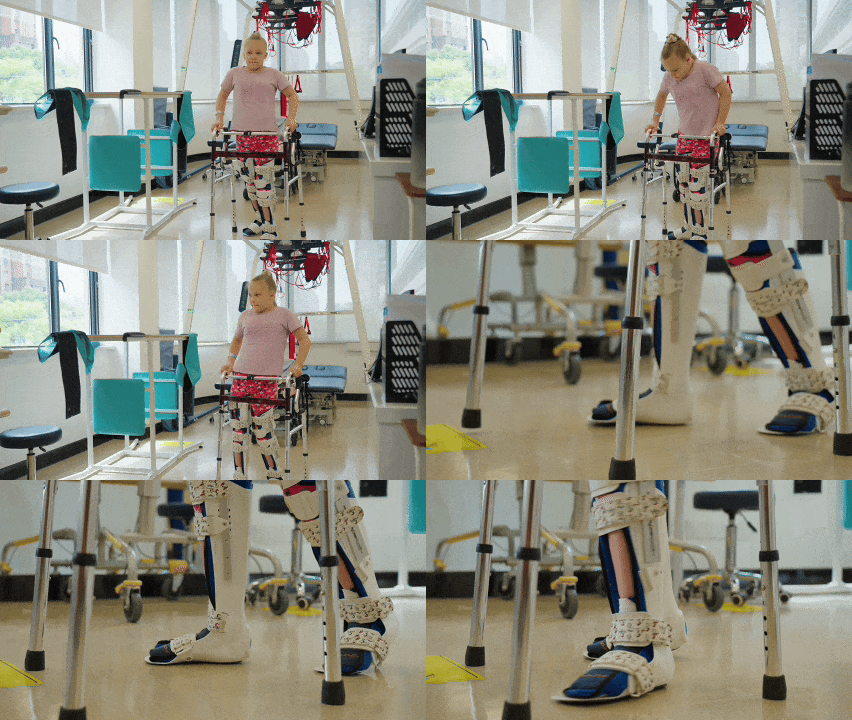
About a month after implantation and the start of rehabilitation, she could stand with support and actively engage her leg muscles. At about three months, she could take voluntary steps with a walker. The team also reported some return of sensation in the soles of her feet and improved hip mobility. Walking without the walker and gaining more independence in daily life remained goals for further rehabilitation. September case report · Zhejiang government report and video
What the doctors assessed before she travelled
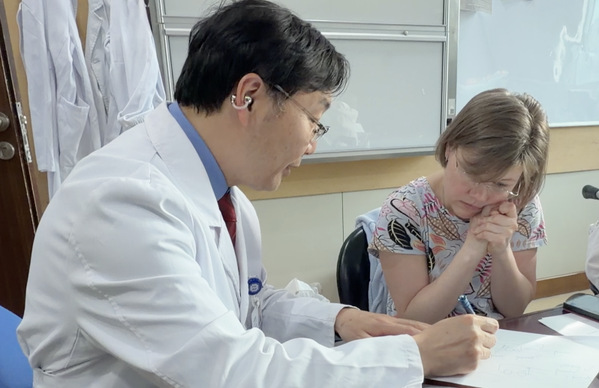
A road accident in June 2025 severely injured her thoracic spinal cord. After about eight months of rehabilitation in Russia, there had been little improvement in her lower-limb movement. With help from the Russian Embassy in China, her family contacted the hospital in Hangzhou. A multidisciplinary team reviewed two questions remotely: whether further treatment might be possible and whether she could manage the long flight. She and her mother arrived in Hangzhou in April 2026.
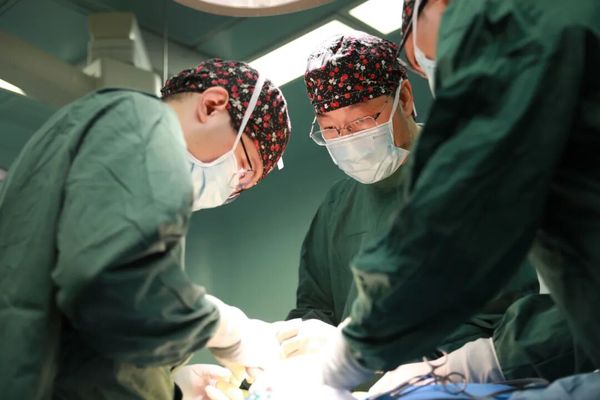
Tests at the hospital showed that some nerve signals still travelled through the injured spinal cord, despite the severe loss of movement. That finding helped the team decide whether implantation was appropriate. As she was still growing, the surgeons also planned the placement and fixation of the electrodes with her future growth in mind. Report on the hospital’s assessment and care
What the spinal cord interface added to rehabilitation
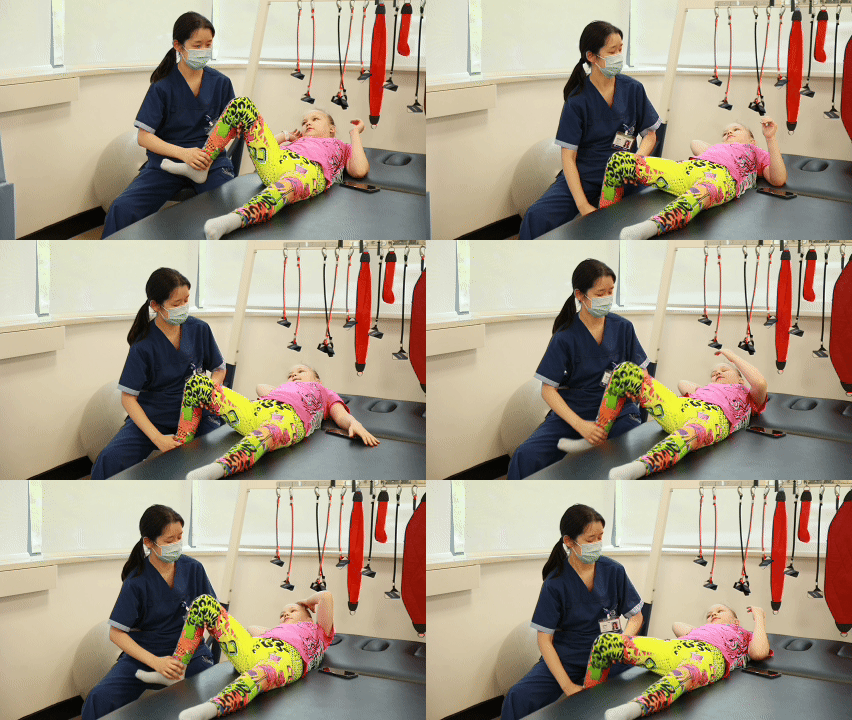
The system developed by the hospital, Zhejiang University and their collaborators uses epidural electrical stimulation to help leg muscles respond to the patient’s own attempts to move. In this system, “closed loop” means that muscle activity provides feedback the team can use to adjust stimulation. Rehabilitation progressed from engaging and controlling the legs to shifting weight while standing and practising steps. Therapists guided the exercises, engineers adjusted the device as her movement changed, and doctors monitored her progress. Report on the rehabilitation programme · The team’s published technical case report (a different patient)
The hospital also drew up a weekly exercise plan for her return to Russia and said it would arrange remote follow-up. This case documents assisted walking. It does not show how much another person might recover or whether the same function would be maintained with stimulation off. Follow-up plans reported by Zhejiang Online
Why the footage is drawing attention again
On November 17, Zhejiang outlets revisited Vera’s recovery. The footage shows her actively taking steps with a walker after months of rehabilitation. She had surgery in April, and reporters documented her progress in September. For other families, the practical questions are how doctors assess remaining movement and what it takes to continue rehabilitation after returning home. November coverage
Watch China News Service’s rehabilitation footage
Which Shanghai hospitals can assess a similar case?
Zhongshan Hospital and Huashan Hospital, both affiliated with Fudan University, are the two Shanghai teams to ask. Fudan reported three proof-of-concept implants at Zhongshan and a fourth at Huashan in 2025. Their brain–spine interface uses signals from the brain to guide stimulation of the spinal cord. Huashan also lists exercise therapy, lower-limb rehabilitation robotics and electrical stimulation for spinal cord injury. Fudan’s case report · Huashan rehabilitation
The Hangzhou team has documented experience with an international child. At SAHZU, the system in Vera’s case used feedback from muscle activity to help adjust spinal stimulation. Her care included rehabilitation and a plan for continuing it at home. Ask SAHZU about the approach used in her case, or ask the two Shanghai teams about assessment for the brain-driven approach. The reports do not establish which works better. Each hospital must confirm study availability, eligibility for overseas children and costs. Zhejiang University’s case report
Frequently asked questions
Can she walk independently now?
The report shows her taking voluntary steps with a walker. Walking without a walker remained a rehabilitation goal.
Can international patients book this implant procedure directly?
Start by asking whether the hospital can review the available records. The hospital must confirm eligibility, whether an in-person assessment is needed, whether it can accept the patient, and what costs and follow-up are involved.
Can my family member ask for an assessment after seeing this case?
You can ask whether a specialist can first review the available records. A summary of the injury, surgical records, spinal imaging and the latest rehabilitation assessment can help. The clinical team will decide whether an implant could be appropriate and which rehabilitation goals are realistic for the individual patient.
What can ZOYING help us with?
We can help you find out whether you need to travel for an assessment. Tell us when the injury happened, what treatment the patient has already had and which ability they most want to improve. We can help organise and translate records, contact the relevant specialists and ask whether they can review the records first, what further tests may be needed and whether an in-person visit is necessary.
If the hospital recommends a visit, we can help clarify appointment timing, the expected length of stay, the hospital’s cost estimate and options for interpretation and in-person support. Before you book travel, we can also ask which rehabilitation sessions need to take place in China and who can manage device adjustments and follow-up after the patient returns home. The hospital determines whether it can accept the patient, whether implantation is appropriate and what medical fees apply.
Contact Zoying Health about a preliminary records review
This case was reported in Chinese in September 2026. The English report published on 17 November covers the same case. Zoying Health prepared this article from public sources.