
Zoying Health Content Team | Updated October 25, 2026
We are highlighting Professor Xianjun Yu because pancreatic tumor patients often face major decisions before they fully understand their situation.
Some have just been told they need complex surgery. Others have started chemotherapy but do not know when surgery should be reconsidered. Some hear “not currently resectable” and begin searching for a surgeon willing to operate.
The underlying questions are practical: Where am I in treatment, which options deserve consideration and how can I make the next decision well?
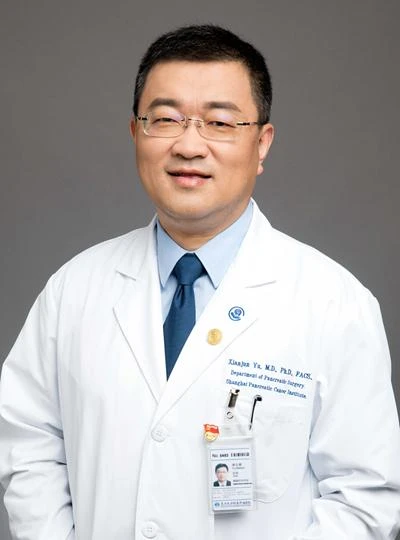
Yu's longstanding work in pancreatic tumor surgery and comprehensive treatment is why we introduce him. Fudan University Shanghai Cancer Center's profile identifies surgery and multidisciplinary treatment for pancreatic and neuroendocrine tumors among his clinical areas. Hospital profile
Before asking whether surgery is possible, ask why it was ruled out
“Surgery is not an option” can mean different things. The relationship between a tumor and major blood vessels may make removal difficult. Distant spread may have been found. Or nutrition, fitness and other illnesses may make an operation too risky at present. These situations lead to different next steps.
The US National Cancer Institute distinguishes resectable, borderline resectable, locally advanced and metastatic pancreatic cancer. Assessment includes vascular involvement and specialist judgment. Complex surgery is not a general solution for disease that has spread to distant sites. NCI pancreatic cancer treatment information
Start by understanding the original recommendation. If chemotherapy comes first, is its purpose disease control, observing disease behavior or creating an opportunity to reconsider surgery? If surgery is not recommended, what is the principal limiting factor?
Those answers determine whether another specialist opinion would be useful and what records the team needs.
Why focus on both surgery and comprehensive treatment?
It is understandable to look for a surgeon prepared to attempt a difficult operation. A complete assessment asks a broader question: when might surgery help, when should other treatment come first and when could pursuing resection add burden without sufficient benefit?
China's National Health Commission has described Yu's work in comprehensive pancreatic tumor treatment and a clinical approach involving surgical, medical and imaging expertise. National Health Commission profile
For patients, collaboration means connected questions can be considered together. Does vascular involvement affect removal? Has earlier treatment changed the situation enough? Can the patient's strength, food intake and weight support the next stage? How would treatment before and after an operation fit together?
We introduce this expertise as a resource for those decisions, not as a guarantee that any difficult case can be operated on.
What would make an opinion in Shanghai meaningfully different?
Pancreatic surgery is not exclusive to China. Your own country may already have an experienced team. A useful comparison starts with the same records and scans: does another assessment identify a different issue, explain a different treatment sequence or offer a clear reason for disagreeing?
If the current recommendation is a course of medication before review, ask when reassessment should occur, what it will examine and what conditions would support surgery. If an operation may involve blood vessels, ask why that is necessary, what removal is intended to achieve, what risks it adds and what alternatives remain.
A valuable difference should help inform your own treatment decision. Titles, robotic equipment and procedure names alone cannot do that.
Records should show how the disease has changed
After chemotherapy, the latest report alone may not describe the full course. Connect the timeline: how the diagnosis was established, when each regimen started, dose changes or interruptions, changes on imaging and changes in general health.
The purpose is to let the receiving hospital understand what has already been done. The hospital decides which scans, pathology and tests are required.
Explain the problem you want addressed. Uncertainty about surgery, difficulty tolerating treatment, checking a diagnosis and exploring options after progression are different requests.
Life after surgery belongs in the plan
Before surgery, patients often ask whether an operation can be completed. During recovery, they may ask about eating, weight loss and restarting treatment. Pancreatic cancer care includes nutritional, digestive and symptom management. NCI pancreatic cancer treatment information
An international plan should therefore cover discharge preparation, subsequent treatment, tests at home and where to seek care if problems arise—not just the operation date.
Costs also belong to the whole stage of care: assessment, additional tests, surgery and anesthesia, admission, pathology, possible extra procedures and later treatment are separate components. Ask the hospital for the detail it can provide as the plan becomes clearer.
How Zoying can move an inquiry forward
Tell us the diagnosis, previous treatment, the current recommendation and the questions you want a Chinese team to address. With authorization and an agreed service scope, we can organize the timeline, coordinate translation and communicate review and appointment requirements to relevant institutions.
The early discussion should clarify whether records are sufficient, whether the hospital will consider further assessment and what you need to do next. Keep unresolved points on a follow-up list; an initial response is not a final treatment plan.
Acceptance, the need for an examination in person and the treating clinician require hospital confirmation. Do not interrupt existing treatment while waiting for a second opinion; discuss the timing with your current doctor.
Why we believe this specialty is worth understanding
Pancreatic tumor decisions often require surgical complexity, disease behavior and the patient's condition to be considered together. Yu and the team's background offers a concrete starting point for learning about pancreatic specialist care in Shanghai.
Our aim is to help patients ask more precise questions and understand the next step.
Contact Zoying about a pancreatic tumor assessment.
Based on public sources to explain care options. Medical assessment, appointments, costs and current availability require case-specific institutional confirmation.