
Huashan Hospital, Fudan University · Hand surgery · Chief physician
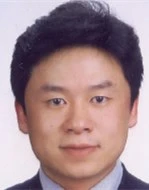
Wendong Xu and colleagues at Huashan Hospital investigated contralateral C7 transfer for spastic arm paralysis after central neurological injury. Building on an operation originally developed for peripheral nerve injuries, the team tested surgery plus rehabilitation in a randomized trial.
A German family contacted Huashan after reading the paper
The mother of a German child with cerebral palsy read the team's research and emailed Xu with her son's medical history. Fudan identifies Xu as the operating surgeon, assisted by Yundong Shen and Tie Li. The report documents both how this family found the specialist and who performed the operation. [5]
How did the team measure arm recovery after a year?
A single-center trial coauthored by Xu compared two approaches in 36 people whose arm had been paralyzed for more than five years after a brain injury. At one year, the group receiving surgery and rehabilitation gained an average of 17.7 points on a 66-point arm movement scale. The group receiving rehabilitation alone gained 2.6 points. If your goal is to hold a cup or dress independently, ask how the study measures relate to that particular movement and what rehabilitation you could continue at home. [3]
A Hand Surgery Background, with a Focus on Nerve Function
Fudan University’s professional profile identifies Xu as a chief physician, professor and doctoral supervisor, with research interests that include brain reorganization after peripheral nerve injury. His field therefore extends beyond the hand itself to the nerve pathways involved in upper-limb function. [1]
Earlier work on contralateral C7 transfer by Academician Yudong Gu provided an important foundation. A 2019 Fudan report describes how the team involving Xu and Gu developed this approach further for spastic arm paralysis after central neurological injury. [2]
This history matters. It shows a surgical idea developing across generations and through collaborative research, rather than a single achievement belonging to one person.
A Clinical Trial Published in the New England Journal of Medicine
In 2018, the New England Journal of Medicine published Trial of Contralateral Seventh Cervical Nerve Transfer for Spastic Arm Paralysis, with Wen-Dong Xu among its authors. The study randomized 36 patients whose unilateral arm paralysis from chronic brain injury had lasted more than five years to surgery plus rehabilitation or rehabilitation alone. [3]
At 12 months, the surgery group had greater improvement in arm-function scores and reduced spasticity. This was evidence from a small, single-center trial in a selected population; it cannot predict an individual patient’s recovery. [3]
Fudan subsequently reported that the paper was selected among the journal’s Notable Articles of 2018. The important point for patients is the underlying process: a surgical innovation was evaluated through comparison, follow-up and functional assessment. [2]
Following the Evidence Beyond a Single Center
A 2022 eClinicalMedicine paper, also coauthored by Xu, reported a retrospective multicenter study across five centers in China and South Korea. It used propensity-score matching to compare surgery and rehabilitation groups, with arm-function change at two years as the primary outcome. [4]
This extended the evidence beyond the original trial to additional centers and longer follow-up. Its observational design, however, differs from a randomized trial and should be interpreted accordingly. [4]
The Operation and Rehabilitation Belong in the Same Discussion
The approach seeks to create a new nerve connection that can support function in the affected arm. It does not repair the original brain injury or imply immediate restoration of normal movement. [2] [3]
The original trial compared surgery plus rehabilitation with rehabilitation alone. Patients should therefore discuss postoperative rehabilitation, follow-up and how meaningful functional progress will be measured—not only whether an operation is technically possible. [3]
Zoying’s reason for introducing Professor Xu is to make this pathway easier to understand. A specialist team must assess the cause and duration of the problem, current function and the patient’s goals.
Patient questions
Is every patient with arm paralysis after a stroke a candidate?
No. The studies involved selected patients. Eligibility requires an individual specialist assessment of the medical history, current function and relevant investigations.
What should I prepare for an assessment in Shanghai?
Start with the diagnosis, available brain imaging and reports, the date of onset, treatment and rehabilitation records, and the daily activities you most want to improve. The hospital will advise on additional assessments.
Can Zoying help me inquire about Professor Xu or the relevant team?
Contact us to discuss your request. We can help organize initial questions and inquire about hospital requirements and appointment procedures. The hospital confirms the treating specialist, surgical eligibility and rehabilitation plan.
Before you travel
To enquire about Wendong Xu and Nerve transfer for upper-limb paralysis, include the specialist’s name and the question you would like answered. Zoying can ask the hospital whether records can be reviewed before travel and confirm the clinician, location, required documents and fees.
Enquire about a review with Wendong Xu
Hospital records and research sources
- Fudan University: professional profile of Wendong Xu
- Fudan University: the Xu–Gu team’s study selected among NEJM’s Notable Articles of 2018
- Trial of Contralateral Seventh Cervical Nerve Transfer for Spastic Arm Paralysis. NEJM, 2018. DOI: 10.1056/NEJMoa1615208
- Reconstruction of paralyzed arm function …: a multicenter study and real-world practice guidance. eClinicalMedicine, 2022. DOI: 10.1016/j.eclinm.2021.101258
- A German family contacted Huashan after reading the paper