
Zoying Health Content Team | Updated October 25, 2026
We are highlighting Professor Weiguo Fu because complex aortic disease can leave patients facing apparently conflicting advice: extensive open surgery, a stent graft or an opinion that the anatomy does not suit a standard endovascular repair.
These choices concern more than incision size. They affect blood supply to vital organs, procedural risk, recovery and future imaging.
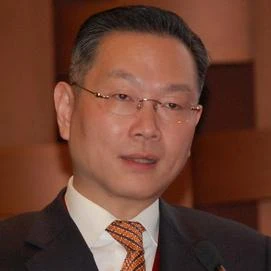
Fu's work includes open and endovascular treatment of conditions such as aortic dissection and thoracoabdominal aneurysm, alongside involvement in device development and application. Zhongshan-related campus profile · Jinshan Hospital profile
For stable patients considering further planning, the useful question is: What makes my anatomy difficult, and which repair options can reasonably be compared?
The challenge may involve several vessels
The aorta supplies important branches throughout the body. Disease location, extent and individual anatomy influence repair.
In a conventional endovascular approach, a covered stent graft is delivered through the vessels to exclude the affected area. NHLBI aortic aneurysm treatment information
Near important branches, placing a graft is only part of the problem. The team must consider fixation, sealing, branch blood flow and any additional reconstruction. This explains why the same diagnostic label can lead to very different plans.
Why we follow Fu's team
Our interest is the range of choices for difficult anatomy, rather than one device presented as a universal product.
A manufacturer's 2025 announcement describes post-approval implantation of a newer branched aortic stent graft at Zhongshan by teams including Fu and Lixin Wang. It documents commercial application following approval in China. Manufacturer's announcement
That is relevant because the device is not merely a research concept. A manufacturer announcement does not independently establish superiority over alternatives or determine suitability for you.
It creates a specific question for the team: could an available branched device, together with the team's experience, offer a different option for my anatomy? If so, compare indications, risks, available sizes and alternatives.
Local device unavailability is not enough to decide on travel
Approvals, hospital equipment and experience differ between regions. The comparison still needs to be individual. Open surgery may be recommended because a device is unavailable—or because the team considers it better for the patient's long-term interests. Those are different reasons.
An endovascular proposal in China is not automatically better. Ask why it fits, whether the intended use falls within approval, whether special or custom arrangements are involved and what alternatives exist.
Individualized devices may have different preparation times. A routine appointment timeline cannot simply be applied to a custom case. Compare benefits, risks and follow-up responsibilities together, rather than only “open” versus “minimally invasive.”
Why original imaging matters
A complex assessment needs the relevant vascular anatomy. A report or a few phone photographs may not support device and surgical planning.
Provide original imaging as requested, details of previous open or endovascular procedures and current symptoms. Preserve device models, operation records and scans over time.
If the earlier explanation concerned inadequate fixation zones or branch involvement, bring that reasoning too. A further opinion should respond to the difficulty, not just repeat the diagnosis. The team determines whether more testing is needed and whether travel is appropriate.
Repair requires a follow-up plan
Professional guidance includes imaging surveillance after repair to assess the aorta and repair device. ACC/AHA aortic disease guideline
Clarify where scans will be performed, how they reach the treating team and who handles new findings. Local doctors need complete procedure and device records.
Ask separately about assessment, devices, surgery, admission and follow-up costs. Discuss when additional intervention might be reconsidered. This is more informative than a package price without clear boundaries.
How Zoying can assist stable patients
With authorization and an agreed scope, we can organize imaging and previous records, coordinate translation and communicate assessment requests. We aim to clarify whether the hospital will review the case, its main concerns, missing information and the next appointment requirements.
Device availability and individualized plans require institutional verification. Whether Fu personally or a related team can assess you, other specialists' involvement and treatment dates require hospital confirmation.
Sudden severe chest or back pain, fainting or other acute changes require immediate local emergency care. This article concerns planning after stabilization; it is not a route for delaying care or arranging acute dissection transfer.
Innovation becomes meaningful when it fits the patient, supports a clear plan and allows sustainable follow-up. We help patients clarify those conditions before deciding whether further travel is worthwhile.
Contact Zoying about assessment of stable aortic disease.
Based on public sources to explain care options. Medical assessment, appointments, costs and current availability require case-specific institutional confirmation.