
Shanghai Ninth People’s Hospital · Plastic and reconstructive surgery · Chief physician
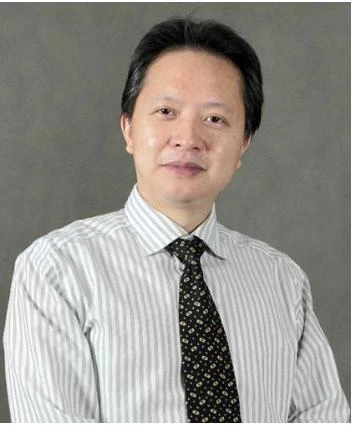
At Shanghai Ninth People’s Hospital, Qingfeng Li’s team studies how to obtain living tissue with an adequate blood supply to reconstruct severe facial defects. His work connects staged tissue expansion in the clinic with research on tissue regeneration.
Whose tissue is used in a prefabricated facial reconstruction?
The Shanghai Medical Association describes Li's work developing prefabricated reconstruction for extensive facial injuries using the patient's own tissue. Tissue is prepared for transfer and shaped to repair the defect. A donor face transplant uses tissue from another person and follows a different clinical pathway. For someone considering further reconstruction after burns, useful questions concern the donor site on their own body, the number of stages and the function each stage is intended to restore. [5]
Starting with complex defects
Some patients in reconstructive surgery need restoration of damaged structures and function as well as changes in appearance. Extensive scarring, tissue loss and the effects of earlier operations can make tissue availability, blood supply and anatomical matching difficult. Understanding a surgeon means looking at the problems addressed over time, rather than treating the entire specialty as cosmetic care.
An institutional report describes the team’s work with tissue expansion and vascularization in reconstruction after severe facial damage. It illustrates that a central challenge is preparing usable tissue and coordinating multiple stages, rather than one isolated maneuver. A reported case can explain an approach; it cannot establish the expected result for every patient. [2]
From surgical needs to regeneration research
In 2023, Cell Reports Medicine published Bioengineered human tissue regeneration and repair using endogenous stem cells, with Qingfeng Li as a co-corresponding author. The paper investigates forming bone and cartilaginous structures through endogenous regenerative capacity and describes applications studied in reconstruction of a deformed metacarpophalangeal joint and microtia. [3]
The medical school describes this work using the concept of space-induced regeneration. In practical terms, the question is whether a deliberately designed environment can encourage the body to form tissue useful for repair. This connects surgery with regenerative medicine, but does not establish that every tissue can be regenerated or that a general stem-cell injection service is available. [4]
Research and an individual treatment plan are different
A regenerative medicine publication can explain a research direction without determining an individual operation. Location, cause of tissue loss, infection, scarring, donor sites and previous treatment can change the plan. The receiving team should clarify established flap or graft options, the need for staging and whether a research technique is relevant.
Why Zoying is introducing Professor Li
We want to make expertise visible beyond a broad specialty label. Professor Li and his colleagues show how reconstructive work can begin with a specific defect and lead to research into tissue sources and regeneration. For international patients, the useful next step is to relate that expertise to the actual reconstructive problem and seek a hospital assessment, rather than choosing a technique by name.
Patient questions
What areas does Professor Li’s work address?
Public records cover severe post-traumatic deformity, complex tissue loss, reconstruction and tissue regeneration research. The hospital confirms acceptance and an individual plan.
Does this article offer a stem-cell treatment booking?
No. It introduces surgical and research work, not a routine regenerative treatment for everyone.
Which records help an assessment?
A history of the defect, previous operative reports, pathology and relevant imaging may help. Start with a brief inquiry, then agree on necessary records and a private sharing method.
Before you travel
To enquire about Qingfeng Li and Facial reconstruction and tissue regeneration, include the specialist’s name and the question you would like answered. Zoying can ask the hospital whether records can be reviewed before travel and confirm the clinician, location, required documents and fees.
Enquire about a review with Qingfeng Li
Hospital records and research sources
- Journal of Shanghai Jiao Tong University (Medical Science): reconstruction after severe trauma
- Shanghai Jiao Tong University School of Medicine: complex facial reconstruction at Ninth People’s Hospital
- Wei et al. Bioengineered human tissue regeneration and repair using endogenous stem cells. Cell Reports Medicine, 2023. DOI:10.1016/j.xcrm.2023.101156
- Shanghai Jiao Tong University School of Medicine: Li and Wei team’s endogenous tissue regeneration research, 2023
- Whose tissue is used in a prefabricated facial reconstruction?