
Zoying Health Content Team | Updated October 25, 2026
We are highlighting Professor Maode Wang because patients can find one recommendation difficult to understand: a surgeon may be able to reach a lesion yet not recommend removing everything visible.
Residual tissue can cause anxiety, while proximity to important structures can make surgery frightening. Patients need to know the goal and why leaving a portion or treating in stages may be appropriate.
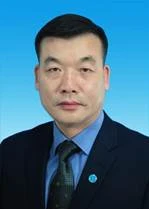
Xi'an Jiaotong University describes Wang's work in minimally invasive pituitary and skull base tumor surgery. University profile
Our interest is an assessment that connects surgical access with functional risk.
Why location changes the surgical goal
Different lesions relate differently to nerves, vessels and functional structures. Size, extent and previous treatment can alter the plan even with the same diagnosis.
Ask whether the operation aims to obtain a diagnosis, relieve pressure or maximize removal. With hormone abnormalities, ask how functional results will be assessed.
“Minimally invasive” cannot summarize these goals. A smaller access route does not make internal work risk-free.
Why endoscopic and microscopic experience matters
Wang's public background includes both approaches. Patients should understand why one is selected. For an endonasal route, what can be reached in this lesion? For another approach, what limitation or structure makes it preferable?
Not every lesion suits the same access. More removal is not always worth added risk. The explanation should be individual and based on diagnosis and imaging.
Distinguish residual disease from recurrence
Visible tissue after surgery and new growth over time may prompt different discussions. Original operation notes, pathology, early postoperative and later scans help establish the situation. The latest report alone should not be used to label the earlier operation a failure.
Functional pituitary disease also requires endocrine evidence. International Cushing's consensus considers clinical, biochemical and imaging information in later management. Consensus
The relevant team should compare repeat surgery with medication, observation, radiotherapy or other pathways.
What should another opinion in Xi'an address?
Start with the unresolved issue: extent of removal, function, access or whether another intervention is necessary.
If advice differs, ask whether another interpretation, different records or an alternative feasible route explains it. Equipment or procedure names alone do not establish international value.
Experienced care may already exist locally, while travel, recovery and follow-up add commitments. A clearer conservative plan can be a useful outcome too; willingness to operate is not the sole measure of a successful review.
Record function before surgery
Provide visual acuity or field changes, hormones and replacement medicines, and neurological symptoms. Report even gradual changes that have become familiar.
Include previous surgery or radiotherapy extent and timing. The team decides whether tests need repeating.
Clarify who explains later pathology and scans, whether ophthalmology or endocrinology review is needed and which symptoms require prompt attention. Medication adjustment needs clinician guidance.
Plan for recovery and later treatment
Ask for individual discharge and travel criteria rather than book around a typical admission length. Allow for additional care needs.
If radiotherapy or ongoing medicines follow, establish continuity before returning home. Separate assessment, surgery, admission and later costs rather than use one price for all cases.
Acute visual, consciousness or other marked neurological changes require prompt local care, not a wait for an overseas opinion.
How Zoying can help
With authorization and an agreed scope, we can organize operations, pathology, imaging and function testing, coordinate translation and communicate requirements.
We aim to convey the question accurately and clarify records, acceptance and handover. Wang's or a related team's arrangements require institutional confirmation.
Patients deserve to understand what treatment seeks to achieve, what it must protect and why some tissue may be left for later management.
Contact Zoying about pituitary and skull base surgical assessment.
Based on public sources to explain care options. Medical assessment, appointments, costs and current availability require case-specific institutional confirmation.