
When a brain tumor or another complex intracranial lesion is diagnosed, patients and families ask more than whether it can be removed. They want to understand what treatment may mean for speech, movement and independent living. The relationship between treating a lesion and preserving function is central to modern neurosurgery.
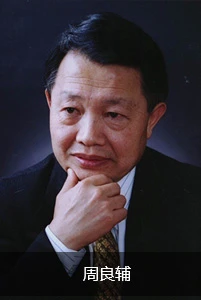
Professor Liangfu Zhou of Huashan Hospital, Fudan University, is one of the Shanghai neurosurgeons Zoying would like to introduce. His public professional profile covers microsurgical and skull base neurosurgery, neuronavigation, endoscopic techniques and stereotactic radiosurgery.[1]
Our focus is the clinical work behind those terms: planning a route through complex anatomy and making functional preservation part of the treatment objective.
Microsurgery and Skull Base Surgery: Working Through Complex Anatomy
Fudan’s Institute of Science and Technology records Zhou’s election to the Chinese Academy of Engineering in 2009 and describes work involving brain and spinal tumors, cerebrovascular disease, and the development of microsurgical, skull base and minimally invasive neurosurgery in China.[1]
These terms refer to different aspects of care. Microsurgery concerns precise work under magnification; skull base surgery addresses demanding anatomy around the base of the skull; navigation connects imaging information with the operative field. Their value depends on the problem being treated.[1]
For a patient, the useful questions concern the lesion’s location, nearby structures and the reasons for the proposed treatment approach.
Studying the Boundary Between Tumor Resection and Language Function
A 2013 Journal of Clinical Neuroscience paper from the Huashan team examined awake language mapping combined with 3-Tesla intraoperative MRI for gliomas involving language areas. Liangfu Zhou is among its authors. The work considered both the extent of tumor resection and functional outcomes.[2]
The clinical question is important: a tumor’s appearance on imaging and the brain regions needed for language are not interchangeable maps. Intraoperative mapping and imaging can provide additional information for surgical decisions.[2]
This team research does not imply that every brain tumor requires awake surgery or that navigation and MRI eliminate neurological risk. The hospital must determine the appropriate plan for each patient.
Clinical Questions That Extend into Brain Research
Other coauthored studies extend this focus to brain mapping and functional organization. A 2019 Neurophotonics paper investigated functional near-infrared spectroscopy for intraoperative brain mapping.[3]
A 2018 Human Brain Mapping study examined cerebro-cerebellar network reorganization in patients with left-hemisphere gliomas involving language networks, using structural and resting-state functional MRI.[4]
These papers are research contributions, not a menu of new treatments available on request. They help explain why clinical teams investigate how brain function is organized and how disease may affect wider networks.
A Contribution That Also Includes Education and Training
In 2022, Fudan reported publication of the third edition of Modern Neurosurgery, edited by Zhou and drawing on the experience of successive generations at Huashan. It records another part of a senior surgeon’s work: organizing clinical knowledge so that it can be taught, reviewed and developed further.[5]
This is part of why Zoying is introducing Professor Zhou. Understanding medical expertise in China involves more than a title. It also means understanding how a specialty develops its knowledge and approaches the balance between disease treatment and everyday function.
An individual assessment remains essential. The lesion’s nature and location, previous treatment and current neurological function shape the next steps. We aim to help patients organize the information and questions needed for a clearer discussion with the hospital.
Frequently Asked Questions
Can every brain tumor be removed with minimally invasive surgery?
No. Whether surgery is appropriate, the route used and the possible extent of resection depend on the lesion and its relationship to important structures. Other treatments may also be considered.
What records are useful for an initial neurosurgical inquiry?
Available contrast-enhanced MRI and original images, pathology, previous surgery and oncology treatment records, and a description of changes in speech, movement, vision or other functions are useful. Ask the hospital before arranging additional tests.
Does contacting Zoying guarantee an appointment with Professor Zhou personally?
No. The hospital confirms which specialist or team can review the case. We can help communicate your request and clarify appointment and document requirements, but a professional profile is not confirmation of a personal appointment or operation.
Would You Like to Discuss an Assessment in Shanghai?
Contact Zoying with a brief summary of the patient’s situation and the questions you would like to discuss. We can help clarify the hospital’s assessment and appointment process.
Contact Zoying · View the doctor profile
Prepared by the Zoying Health Team from public institutional records and published studies, reviewed on October 23, 2026. Research and historical professional records do not confirm current appointment availability or predict individual outcomes. The hospital confirms the treating team, assessment and treatment arrangements.
References
- Fudan Institute of Science and Technology: Liangfu Zhou
- Awake language mapping and 3-Tesla intraoperative MRI-guided volumetric resection for gliomas in language areas. Journal of Clinical Neuroscience, 2013. DOI: 10.1016/j.jocn.2012.10.042
- Functional near-infrared spectroscopy for intraoperative brain mapping. Neurophotonics, 2019. DOI: 10.1117/1.NPh.6.4.045010
- Reorganization of cerebro-cerebellar circuit … gliomas involving language network. Human Brain Mapping, 2018. DOI: 10.1002/hbm.24324
- Fudan University: third edition of Modern Neurosurgery edited by Liangfu Zhou (2022)