
Zoying Health Content Team | Updated October 25, 2026
We are highlighting Professor Jinzhong Zhao because some patients' greatest frustration comes after surgery and rehabilitation: they still cannot trust their knee.
Walking on level ground may be manageable, but turning, descending stairs or returning to ball sports brings a feeling of giving way. Some sustain another injury; others avoid activity, unsure whether rehabilitation is incomplete or another operation should be considered.
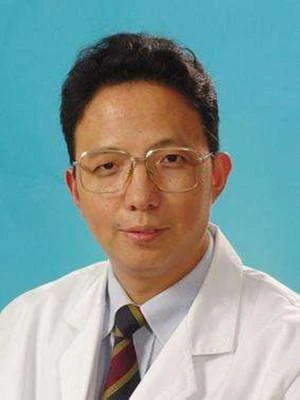
Shanghai Sixth People's Hospital identifies complex knee ligament injury among Zhao's clinical interests. Hospital profile
The assessment should answer: Why is the knee unstable, and what would need to change to approach the patient's goals?
Instability does not automatically mean replacing the ligament again
Persistent instability after anterior cruciate ligament reconstruction calls for review of the injury, operation and rehabilitation. The graft, tunnels, meniscus and other stabilizing structures may need assessment, together with examination of the reported instability. Revision planning differs from a first reconstruction. Professional review of revision ACL reconstruction
Start with the cause, not a new material. Problems involving strength, movement control or recovery progress may require a different response from structural failure. The team determines whether surgery is necessary in light of findings and goals.
Why complex ligament experience interests us
Patients hear about single- and double-bundle reconstruction, artificial ligaments or additional stabilization without knowing how these relate to their knee. Relevant expertise should explain what stability is missing, why a particular plan is proposed and what each extra procedure intends to achieve.
Zhao is a corresponding author of the 2022 Chinese evidence-based ACL guideline, which addresses diagnosis, treatment and rehabilitation. Chinese ACL guideline
A more complicated name does not establish a better operation. A clear plan connects graft choice, tunnel management and associated procedures to the actual problem, while explaining alternatives.
What makes a Shanghai second opinion useful?
If revision has been proposed locally, the new review should address the reason for failure or instability, what the revised plan changes, whether stages are necessary and whether the rehabilitation goal is realistic.
If recommendations differ, identify whether the difference concerns interpretation of the findings, reconstruction strategy or an unresolved prerequisite. A promise of earlier sport is not enough: materials, accompanying injuries and revision conditions all affect recovery.
The value of specialist experience lies in a clearer judgment about your knee, not a technique used as a substitute for the whole decision.
Walking and returning to the court are different goals
Recovery does not end with a healed wound or painless walking. Commuting, physical work, running and pivoting sports require different targets. AOSSM emphasizes sustained rehabilitation rather than simply waiting a fixed period. AOSSM ACL information
International patients need more than an operation and suture removal. Clarify who directs rehabilitation at home, how they communicate with the surgeon, when function is assessed and who authorizes progression. A calendar date cannot replace assessment of strength, stability and movement.
A first assessment does not necessarily lead to surgery
Newly injured patients may also need another opinion. Reconstruction decisions consider instability, associated injuries, activity demands and nonsurgical management; an imaging label alone does not determine treatment. AAOS ACL patient information
Describe the activity you want to regain, rather than requesting “the strongest ligament.” Similar imaging may lead to different discussions for different lives.
Do not leave out the first operation
After reconstruction, preserve operation notes, implant details, arthroscopy records, earlier and recent scans and rehabilitation history. Explain when reinjury occurred and which movements provoke instability.
For a new injury, describe timing, mechanism, swelling, restrictions and treatment so far. The hospital determines further tests. Do not repeatedly perform risky movements merely to demonstrate giving way on video.
Connecting surgery and rehabilitation
With authorization and an agreed scope, Zoying can organize records, coordinate translation and communicate assessment requirements. Discuss care in China and rehabilitation at home together. Where a local therapist is involved and consent is obtained, we can help convey necessary surgical and rehabilitation instructions; professionals direct the exercises.
Separate assessment, surgery, materials, admission and rehabilitation costs. Appointments with Zhao or a related team require confirmation.
Our aim is evidence-based confidence: an explanation of the problem, a clear repair goal and rehabilitation that can actually continue.
Contact Zoying about knee ligament and sports injury assessment.
Based on public sources to explain care options. Medical assessment, appointments, costs and current availability require case-specific institutional confirmation.