
Zhongshan Hospital · Shanghai · Vascular surgery · Chief physician
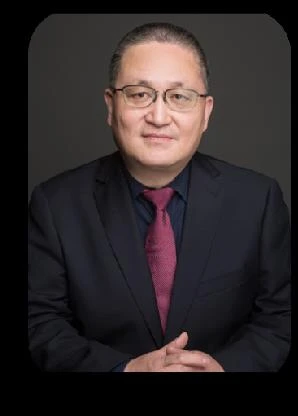
Daqiao Guo of Zhongshan Hospital has studied a difficult choice in carotid near-occlusion: stenting or open surgery. Work he coauthored includes a retrospective comparison in 92 patients and a separate study of whether plaque features on CT were associated with new ischemic brain lesions after stenting.
What did scans and symptoms show after stenting or endarterectomy?
Guo coauthored a study of 92 people with carotid near-occlusion. Within 30 days, diffusion-weighted MRI showed new lesions in 31 of 54 people treated with a stent and 13 of 38 treated with endarterectomy. The study detected no significant difference in clinical ischemic stroke over that period. During an average 28.3 months of follow-up, one stented artery and four surgically treated arteries narrowed again. If two teams have suggested different procedures, ask how each would monitor early brain ischemia and arrange repeat vascular imaging after you return home. The comparison was retrospective. [1]
Comparing approaches in carotid near-occlusion
A 2019 Annals of Vascular Surgery paper documents Guo’s affiliation with Zhongshan Hospital’s vascular surgery department and institute. It retrospectively compared carotid stenting and endarterectomy in 92 patients with near-occlusion, examining perioperative and follow-up outcomes. [1]
These are different procedures: stenting works within the vessel, whereas endarterectomy surgically addresses the lesion. Whether revascularization is appropriate, and by which approach, depends on symptoms, the lesion and clinical circumstances. Neither should become a default answer from a paper alone.
Interpreting outcomes without overstating them
Some clinical endpoints did not differ statistically in the study, while new diffusion-weighted imaging lesions and subsequent restenosis differed. It was not a randomized equivalence trial and cannot establish equal safety for all patients. [1]
Useful questions concern how similar the study population is to the patient, which risks matter most, and how neurological symptoms, vascular anatomy and other conditions inform advice. Different outcomes need separate interpretation; one favorable number should not stand in for the whole decision.
Looking beyond initial vessel opening
A 2018 paper indexed by Fudan’s medical library, with Guo among the authors, reviewed 34 patients treated with closed-cell stents for carotid pseudo-occlusion and assessed remodeling. It illustrates that technical completion is followed by continuing evaluation of the vessel. [2]
This retrospective series cannot establish one stent as superior to all alternatives or guarantee freedom from restenosis. Clarify imaging follow-up, medication review and whom to contact for new symptoms. International patients particularly need a local clinical plan.
Using plaque imaging to investigate procedural risk
A 2020 Fudan University Journal of Medical Sciences paper involving Guo examined associations between CT plaque features and new ischemic brain lesions after stenting. It extends the question from the degree of narrowing to the lesion’s characteristics. Associations inform risk investigation but do not make a single imaging feature a precise personal forecast. [3]
Prepare the symptom timeline, original ultrasound and CTA or other imaging, previous stroke records and medicines. Sudden facial drooping, one-sided weakness or speech disturbance suggesting stroke requires immediate local emergency assistance, not an overseas referral wait.
Zoying helps clarify records and arrangements; the treating team determines intervention, approach and risks. The aim is better questions for consultation, not self-selection of a stent from a website.
Patient questions
Does severe narrowing always require a stent?
No. Symptoms, anatomy and the complete clinical assessment matter.
Does no significant difference establish equal safety?
No. Study design and sample size limit that interpretation.
Should suspected acute stroke wait for international arrangements?
No. Seek local emergency assistance immediately.
Before you travel
To enquire about Daqiao Guo and Carotid near-occlusion and vascular surgery, include the specialist’s name and the question you would like answered. Zoying can ask the hospital whether records can be reviewed before travel and confirm the clinician, location, required documents and fees.
Enquire about a review with Daqiao Guo
Hospital records and research sources
- Retrospective comparison of stenting and endarterectomy for carotid near-occlusion, 2019. DOI:10.1016/j.avsg.2019.01.019
- Fudan medical library: closed-cell stenting study in carotid pseudo-occlusion, 2018
- CT carotid plaque features and new ischemic lesions after stenting, 2020. DOI:10.3969/j.issn.1672-8467.2020.06.011